3d jl | The Evolution of Strategy Games: Embracing 3D JL Technology
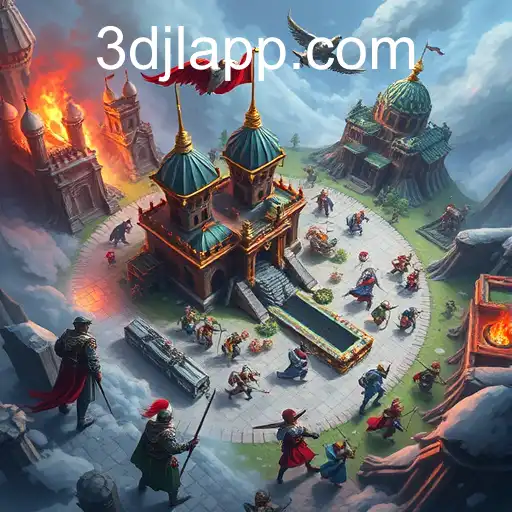
In the ever-evolving landscape of digital gaming, the category of strategy games continues to captivate and challenge players worldwide. As technology progresses and developers push the boundaries of what games can achieve, one of the emerging trends is the infusion of three-dimensional (3D) experiences with the intricacies of strategy gameplay. This article delves into the dynamic realm of strategy games, with a specific focus on the innovative integration of '3D JL' as a keyword that signifies the cutting-edge advancements within this genre.
Strategy games are beloved for their intellectual rigor, requiring players to hone skills in planning, resource management, and tactical execution. Traditionally, these games were often rendered in two-dimensional (2D) formats, which sufficed for conveying complex information and providing a clear vista of the battlefield or economic landscape. However, the incorporation of 3D graphics has introduced new dimensions, literally and figuratively, to these games.
'3D JL' can be understood as a pivotal element in the next phase of strategy game development. It denotes the use of advanced 3D graphics technology potentially enhanced by machine learning algorithms—often referred to as 'JL' in tech-centric discussions. This blend ensures that visual realism is matched by intelligent, adaptive in-game systems that respond to player actions in sophisticated ways. The impact is not merely aesthetic; it transforms the strategic experience into something more immersive and responsive.
One notable impact of this 3D progression is the ability to mimic real-world physics and environments more accurately, allowing for innovative tactical dimensions that were previously impossible. Players can now consider terrain elevation, line of sight, and realistic weather conditions in their strategic planning. This change not only affects new game development but also breathes new life into classic titles through remastered releases. Games like the Total War series and StarCraft have started to implement 3D JL elements, providing players with updated versions that maintain the strategic depth while adding fresh layers of complexity.
Moreover, the immersive power of 3D environments encourages a more involved narrative experience. Storylines in strategy games, which were often depicted via static text and cutscenes, can now unfold dynamically within the game world itself. This quality gives developers new storytelling tools to engage players more deeply, setting the stage for emergent gameplay that varies with each playthrough.
In conclusion, the evolution towards 3D JL in strategy games represents an exciting crossroads where traditional gaming meets innovative technology. As developers continue to explore these possibilities, players can look forward to even richer, more challenging encounters that push their strategic thinking to new heights. This integration not only enhances gameplay but also redefines what we can expect from strategy games in the future.
Revolutionizing Online Gaming: The Role of 3D JL in 2026
Explore how 3D JL is transforming online gaming landscapes with unprecedented technological advances in 2026.
Revolutionizing Entertainment: The Rise of 3D Gaming
Explore the impact and evolution of 3D gaming in the digital entertainment industry.
The Rise of 3D Gaming in the Mid-2020s
Exploring the evolution of 3D gaming, its challenges, and its future potential in global entertainment.
Evolving Trends in 3D Gaming Technology
Explore the current trends and future possibilities in 3D gaming technology as it reshapes the digital entertainment landscape.